Classic Games Database
ClassicGames DB

Kirby’s Pinball Land

Review
Also known as
Kirby no Pinball カービィのピンボール

Control Kirby as the ball across three tables to defeat bosses and reclaim the Pinball Lands.

Kirby's Pinball Land was developed by HAL Laboratory and published by Nintendo for the Game Boy, first released in Japan on November 27, 1993, with North American and European releases later in 1993. It is an original Game Boy title and was not released on any earlier platform.


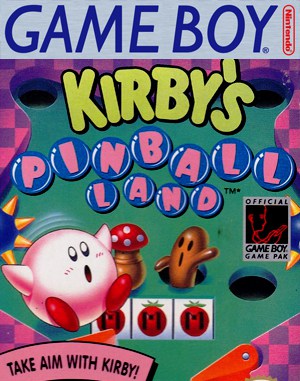
							Kirby’s Pinball Land cover
Play Game Play directly in your browser
Released
1993
Genre
Perspective
Top-down
Visual
2D scrolling
Size
119.13 KB
Rating
0 votes

About Kirby’s Pinball Land

Kirby's Pinball Land adapts the Kirby series into a pinball format, where the character himself serves as the ball. The primary objective involves confronting a series of bosses across three distinct tables, each referred to as a Pinball Land, culminating in a final encounter with King Dedede.

Each Pinball Land is structured across four screens. Progression requires completing specific tasks on the top screen to unlock the boss encounter. The boss battles introduce a challenging element, as opponents can disable the flippers, requiring precise shots to defeat them. Falling from the bottom screen results in losing a life, though a well-timed button press can activate a springboard to save Kirby, a maneuver that becomes progressively more difficult.

Gameplay across the screens includes various objectives. The central screen typically provides access to a bonus round, where points, bonus totals, and multipliers can be increased. These accrued bonuses are then added to the player's final score upon losing a life, mirroring standard pinball conventions.

Kirby’s Pinball Land Screenshots

12 images
Title Screen
The football bonus game.
Reach certain score levels and some Kirbies dance.
Intro
Highscores
Selecting the table
Gameplay
Each table is divided into several sections which each fill one screen and have their own pair of flippers
Statistics
Title screen on the Super Game Boy. The game gets internally detected and this palette gets assigned out of the predefined ones.
Gameplay on Super Game Boy
Title screen on Game Boy Color. Another game that get's a palette assigned, and it's another unique one (not selectable by user when turning on the handheld)