
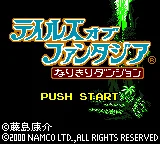
About Tales of Phantasia: Narikiri Dungeon
Tales of Phantasia: Narikiri Dungeon is a sequel that blends traditional Japanese RPG elements with roguelike dungeon exploration. Its story begins when the player, acting as an unseen adoptive parent, discovers two infants named Mel and Dio after a meteor fall. Thirteen years later, a spirit informs the teenagers they must undertake trials across different time periods to avert a doomed fate.
The game's combat is turn-based but features an uncommon leadership system. While the player has full control over the party of Mel, Dio, and their pet Kurūru, only the designated leader's turn prompts for direct commands. The other two characters act automatically based on preset strategies, though the player can manually override these instructions at any time before their turn is processed.
Exploration involves navigating procedurally generated dungeons where the map is revealed through movement. Progress is challenging as saving is restricted to specific non-combat floors, and players must advance without backtracking on standard floors, though the game does not feature permanent character death.
A central mechanic is a costume system that functions similarly to a job system. By wearing different costumes, Mel and Dio gain associated abilities and can eventually fuse costumes to create new ones. These costumes, along with a personality meter they influence, are key for completing side requests. The personality system is more integral for Kurūru, directly determining her form, statistics, and available artes in battle.
Outside of dungeons and combat, significant narrative and mechanical choices occur through the adoptive parent's role. After major battles, the player answers questions posed by Mel and Dio, which have a substantial effect on their developing personality metrics.